
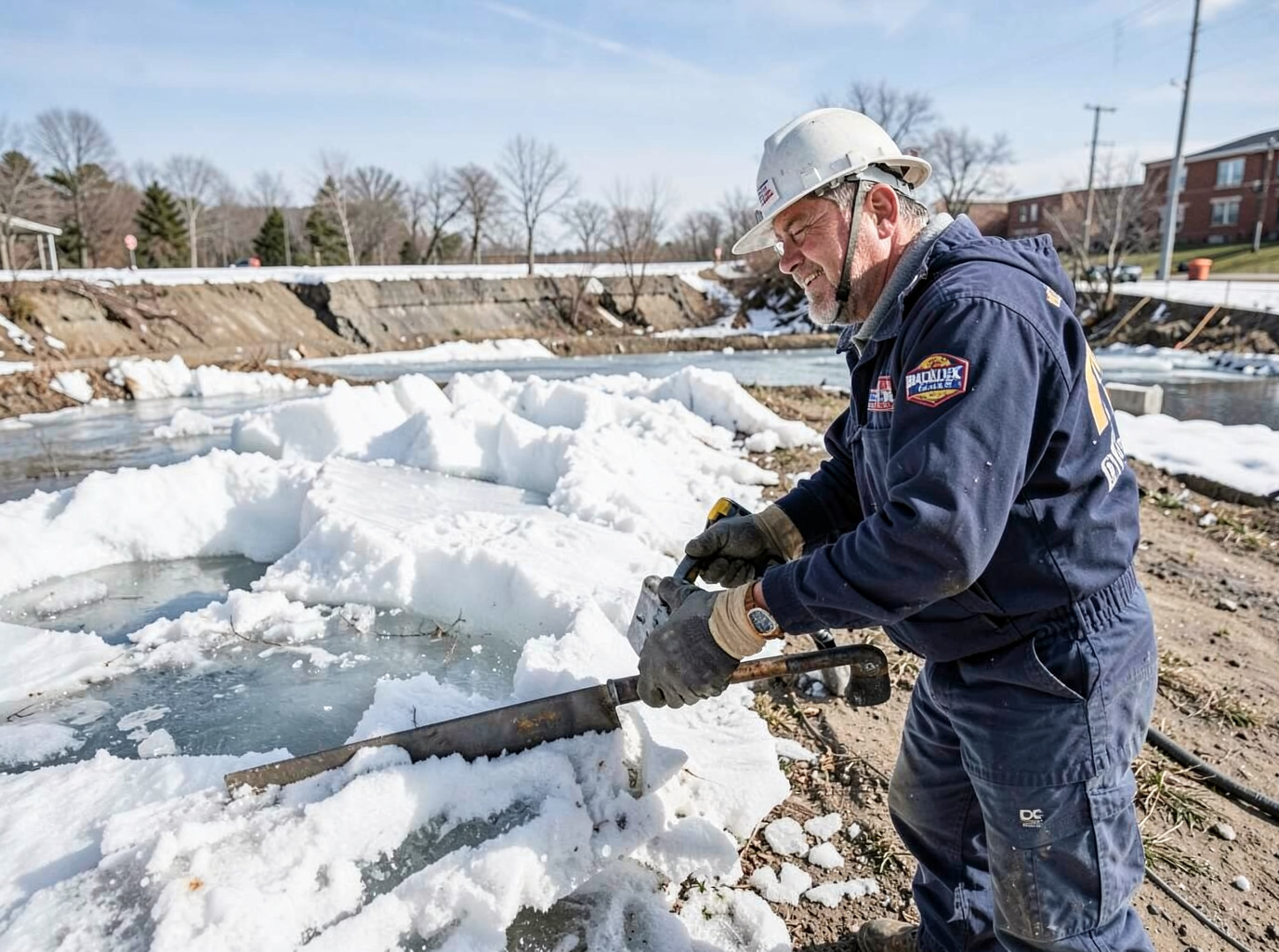
Battle Creek winters bring repeated freeze-thaw cycles that push snow melt under shingles on homes throughout Lakeview, Urbandale, and Springfield. These cycles form ice dams most often on older roofs with marginal attic insulation, where heat loss from living spaces melts snow that then refreezes at the eaves. Left in place, the dams back water under shingles and into attics, damaging drywall and ceilings in homes built before modern ventilation standards became common in Calhoun County.
Effective removal starts with identifying the exact heat-loss points rather than simply chopping ice. Steam or hot-water wands clear the dam without tearing shingles, while crews check for blocked soffit vents or compressed insulation that traps warmth against the roof deck. In neighborhoods near Kellogg's Headquarters and Battle Creek Linear Park, many two-story homes have limited roof access, so technicians work from ladders and use extension tools to reach valleys and dormers without risking falls on icy surfaces.
Prevention focuses on correcting the temperature differential between the attic and outside air. Adding baffles, sealing bypasses around chimneys, and improving ridge ventilation reduces the warm spots that trigger dams. Homeowners in Downtown Battle Creek and nearby Springfield often see the best long-term results when insulation upgrades are paired with targeted heat cable runs along eaves and in valleys, especially on roofs that face prevailing winter winds from the northwest.
Service calls increase after any stretch of sub-freezing temperatures followed by a day above 30 degrees, a pattern common between December and March. Crews based in Battle Creek schedule inspections early in the season to locate trouble spots before the first major storm, reducing emergency removals for residents who also commute to Kalamazoo or Portage for work.
Technician insight
In Battle Creek, the thing that catches most people out with Ice Dam Removal and Prevention is how older homes in Urbandale and Lakeview trap heat in the attic because the original insulation was never updated when new shingles went on. That single detail turns one storm into repeated dam calls every winter.
Lakeview Two-Story Ice Dam
Heavy snow followed by a warm day left a solid dam along the north eaves of a 1940s home. Inspection showed compressed insulation near the ridge allowing warm air to reach the deck. Crews removed the ice with steam wands, added ridge baffles, and ran heat cable along the affected valleys. No further water intrusion occurred during the remaining winter.
Ice Dam Removal and Prevention Services We Offer
✓Ice Dam Removal
Steam wand extraction clears existing dams on Battle Creek roofs without shingle damage, followed by water intrusion checks in attics.
✓Heat Cable Installation
Self-regulating cables installed along eaves and valleys prevent new ice formation during Calhoun County freeze-thaw cycles.
✓Attic Insulation Assessment
Inspection identifies heat-loss points in older Lakeview and Urbandale homes that drive ice dam formation.
✓Soffit and Ridge Vent Cleaning
Clearing blocked vents restores airflow and lowers attic temperatures that contribute to roof ice buildup.
✓Gutter and Downspout Winterization
Installation of gutter guards and extensions directs meltwater away from foundations in Springfield neighborhoods.
✓Roof Snow Removal
Controlled snow clearing from high-risk roof sections reduces the load that feeds ice dams during extended cold spells.
Ice Dam Removal and Prevention Cost in Battle Creek, MI
| Service | Typical Range | What Affects It |
|---|---|---|
| Ice dam removal | $250–$650 | Depends on number of dams and roof stories |
| Heat cable installation | $400–$900 | Per linear section along eaves and valleys |
| Attic insulation upgrade | $800–$2,200 | Varies by square footage and access |
| Vent cleaning and baffles | $300–$550 | Includes soffit and ridge work |
Ranges are typical for Battle Creek, MI and confirmed with an exact written quote before any work starts.
How it works
- 1
Site Inspection
Technician examines roof edges, attic access points, and insulation condition on the specific Battle Creek property.
- 2
Ice Removal
Steam equipment melts and clears dams while protecting shingles and checking for existing leaks.
- 3
Heat-Loss Diagnosis
Infrared scan and visual check locate insulation gaps or ventilation issues driving repeated dam formation.
- 4
Prevention Work
Install heat cable, improve ventilation, or add insulation as needed based on findings.
- 5
Final Walkthrough
Review completed work with homeowner and provide seasonal maintenance guidance.
Pricing
Upfront quotes provided after inspection; costs vary with roof pitch, dam extent, and access in Battle Creek neighborhoods.